Astana — 15 October 2026
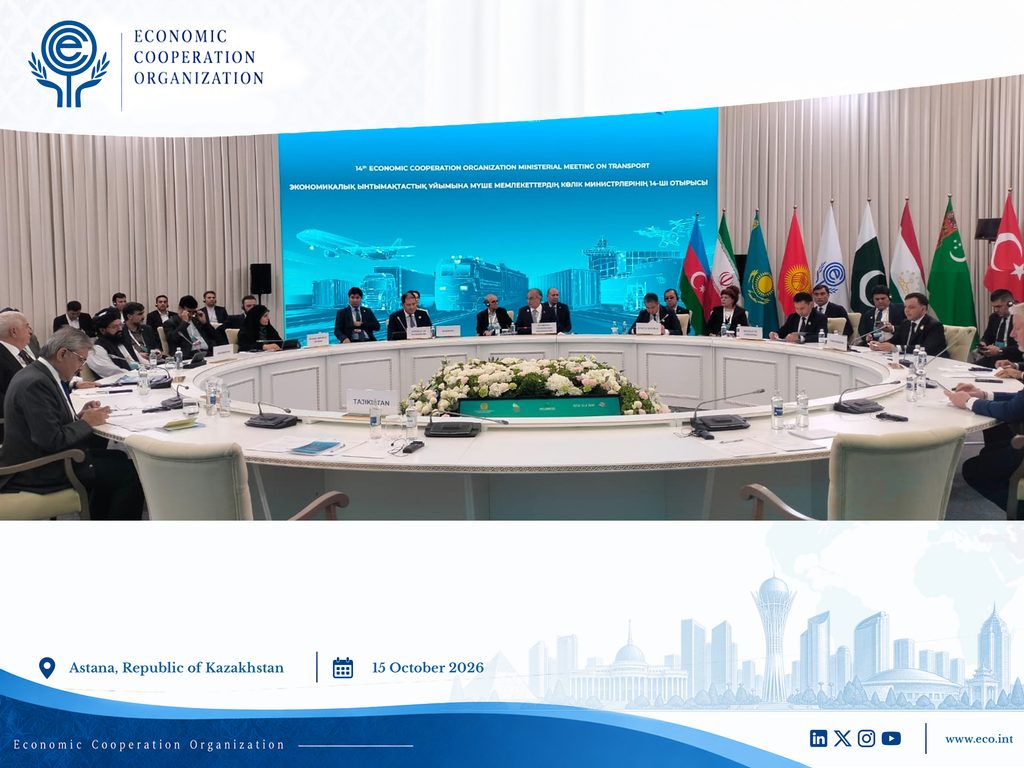
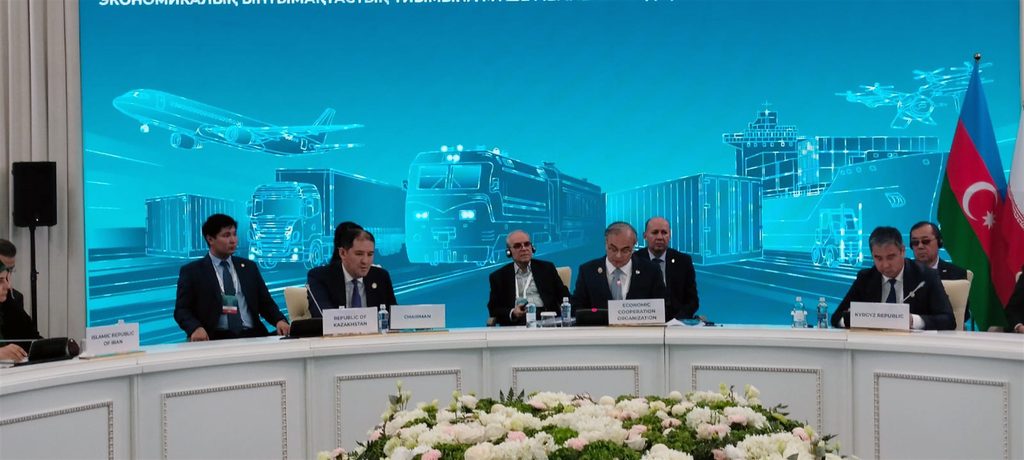
The 14th ECO Ministerial Meeting on Transport was held in Astana on 15 October 2026, hosted by the Ministry of Transport of the Republic of Kazakhstan and preceded by the Senior Officials’ Meeting, alongside the New Silk Way Transport and Logistics Forum aimed to exchange views, focused on shared priorities, including regional connectivity, transport digitalization and trade facilitation, and provided an opportunity to strengthen cooperation among regional and international partners.
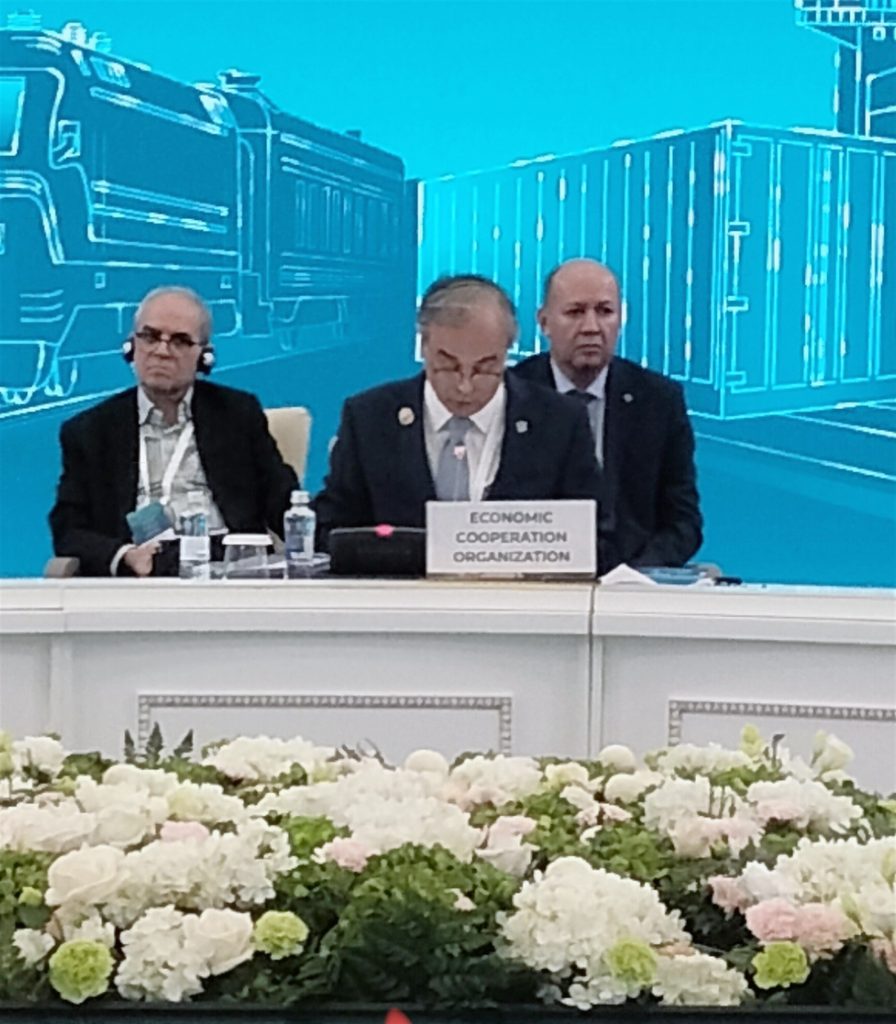
Dr. Asad M. Khan, ECO Secretary General, emphasized that connectivity extends beyond physical infrastructure and called for a comprehensive approach combining infrastructure investment with trade facilitation and greater regional economic integration. He highlighted the ECO Sustainable and Resilient Transport Strategy for 2026–2035, identified the connectivity needs of the seven landlocked Member States as a priority, and stressed the need for concrete, economically viable and bankable projects.
H.E. Mr. Zhanibek Taizhanov, Vice Minister of Transport of the Republic of Kazakhstan, underlined Kazakhstan’s commitment to advancing regional transport cooperation, strengthening transit corridors and promoting sustainable connectivity across the ECO region.
The Ministers and Heads of Delegation underscored the shared priorities of regional connectivity, transport digitalization and trade facilitation, and welcomed the opportunity to strengthen cooperation among regional and international partners. Particular attention was given to the special needs and challenges of landlocked countries, with emphasis on facilitating uninterrupted access to regional and international markets, enhancing transit links, removing border and logistical bottlenecks, and advancing sustainable and resilient transport networks for the benefit of all Member States.
The Meeting adopted the ECO Sustainable and Resilient Transport Strategy for 2026–2035, the Astana Declaration and the Report of the Meeting, with a view to ensuring their effective implementation and thereby advancing regional connectivity, transport digitalization and trade facilitation across the ECO region.