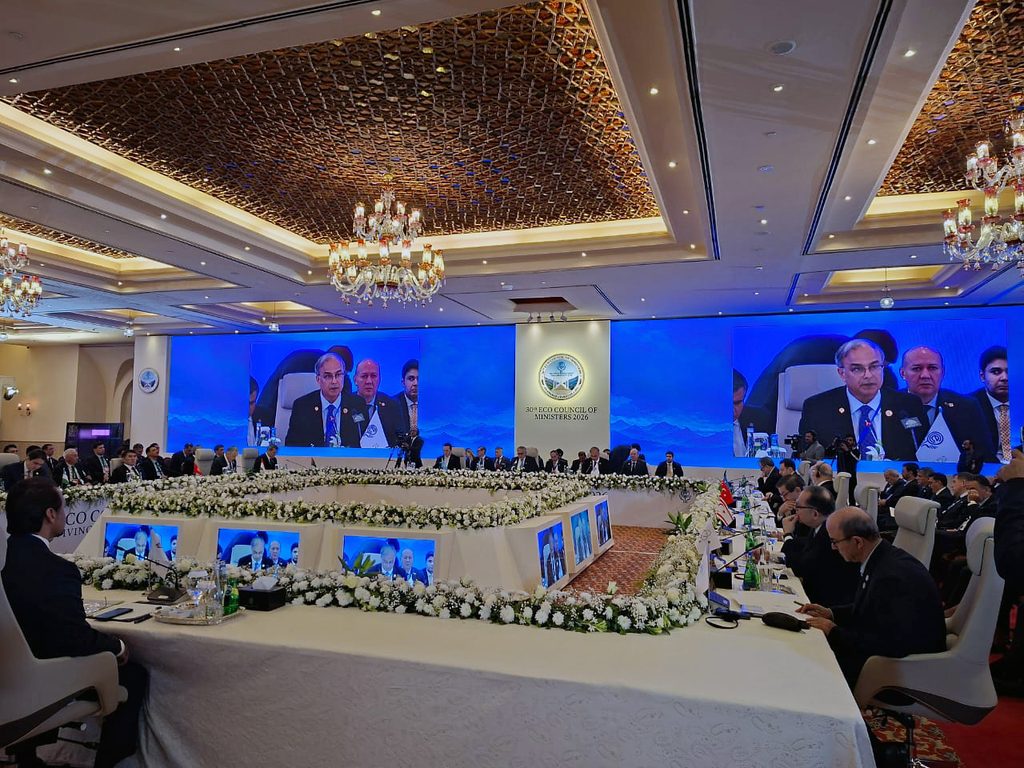
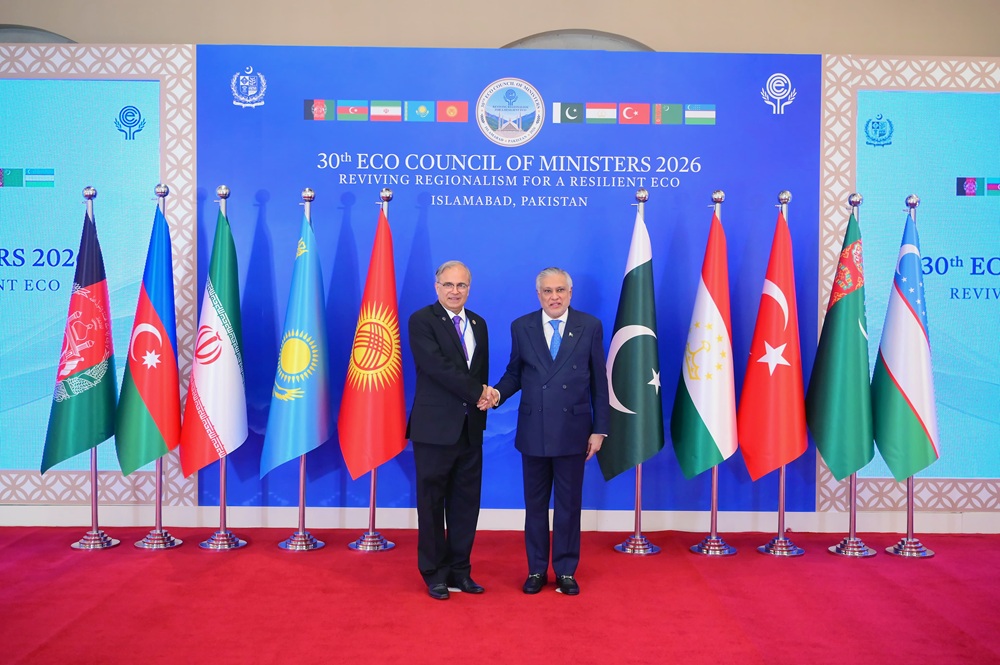
Islamabad, 16 November 2026
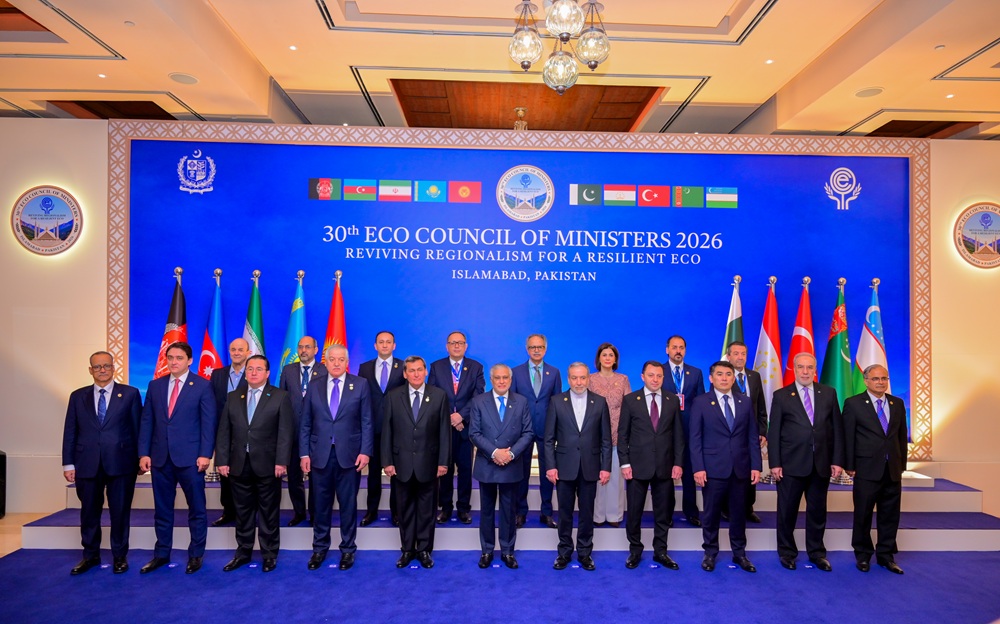
The 30th Meeting of the ECO Council of Ministers (COM) successfully concluded today in Islamabad, Pakistan, with the adoption of two landmark documents, including the Strategic Goals of Economic Cooperation–2035 and the Islamabad Communiqué, marking a significant step towards strengthening regional cooperation, economic integration and shared prosperity.
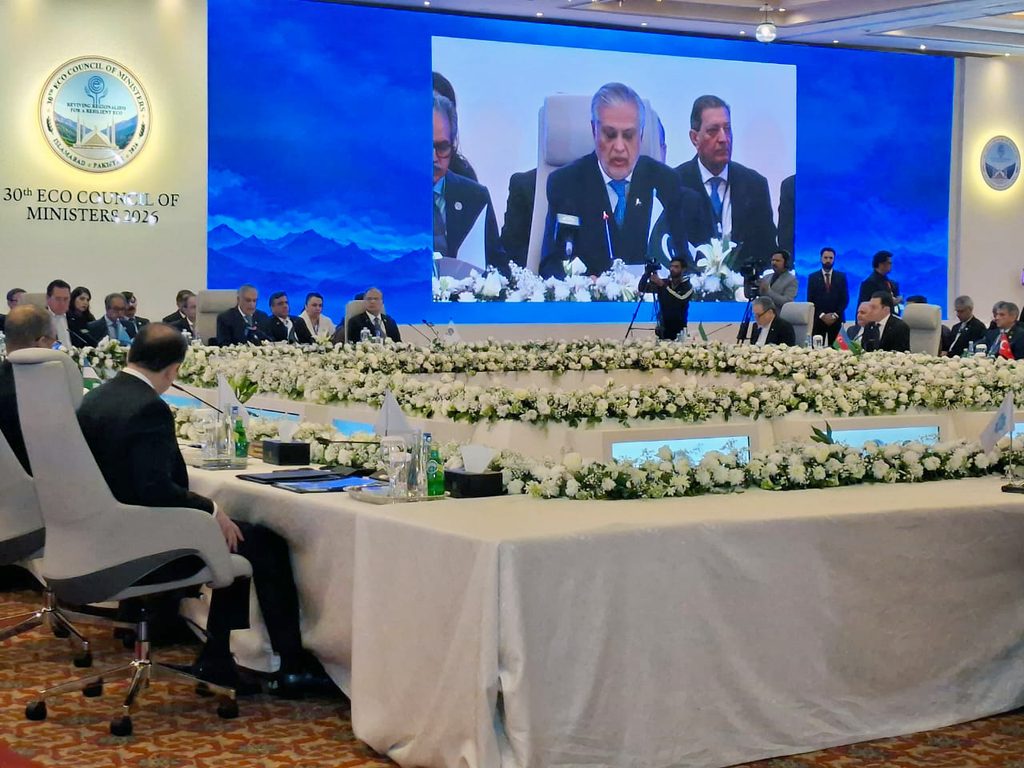
The Meeting was chaired by H.E. Senator Mohammad Ishaq Dar, Deputy Prime Minister and Minister for Foreign Affairs of Pakistan, and attended by Ministers and Heads of Delegation of ECO Member States, along with representatives of international partner institutions and ECO bodies.
Held under the theme “Reviving Regionalism for a Resilient ECO,” the Meeting reaffirmed Member States’ collective commitment to revitalizing the Organization and translating regional cooperation into tangible results.
The adoption of the Strategic Goals of Economic Cooperation–2035, succeeding ECO Vision 2025, establishes a new strategic framework for the coming decade, focusing on deeper economic integration, enhanced connectivity, sustainable development and institutional effectiveness. The Islamabad Communiqué further reinforces Member States’ shared resolve to advance regional priorities through stronger political ownership and practical cooperation.
Addressing the Council, H.E. Senator Mohammad Ishaq Dar reaffirmed Pakistan’s commitment to advancing ECO’s objectives, emphasizing regional trade and investment, transport connectivity, economic integration, resilience and human development as key priorities of Pakistan’s Chairmanship.
ECO Secretary General H.E. Ambassador Dr. Asad M. Khan highlighted the Organization’s resilience and achievements during a challenging year, including a record number of ministerial meetings since 1992. He outlined significant progress in trade, transport, energy, environment, industry, tourism and disaster risk reduction, particularly the revival of key ministerial processes, negotiations to revise ECOTA and adoption of new regional strategies. Welcoming the Strategic Goals–2035 as a major milestone, he called for sustained political commitment, effective implementation and comprehensive institutional reforms to make ECO more agile and results-oriented.
H.E. Mr. Arman Issagaliyev, Deputy Minister of Foreign Affairs of Kazakhstan, speaking in his country’s capacity as the previous ECO Chair, addressed the Council on regional cooperation and the importance of sustaining momentum in advancing ECO’s priorities. Ministers and Heads of Delegation of Member States also reaffirmed their commitment to strengthening regional economic integration, expanding trade and investment, improving connectivity and addressing shared development challenges.
The Council reviewed the Organization’s activities and achievements since its previous meeting, including progress in sectoral cooperation and the work of ECO specialized agencies and regional institutions. It also considered recommendations of the High-Level Committee of Deputy Foreign Ministers concerning institutional reforms, as well as administrative and financial matters.
The Meeting provided fresh momentum to ECO’s regional cooperation agenda ahead of the 18th ECO Summit, scheduled to be held in Tehran on December 3-4 2026.
The Council expressed appreciation to Pakistan for its Chairmanship, warm hospitality and excellent arrangements, and acknowledged the efforts of the ECO Secretariat in facilitating the Meeting.