Antalya – April 18, 2026
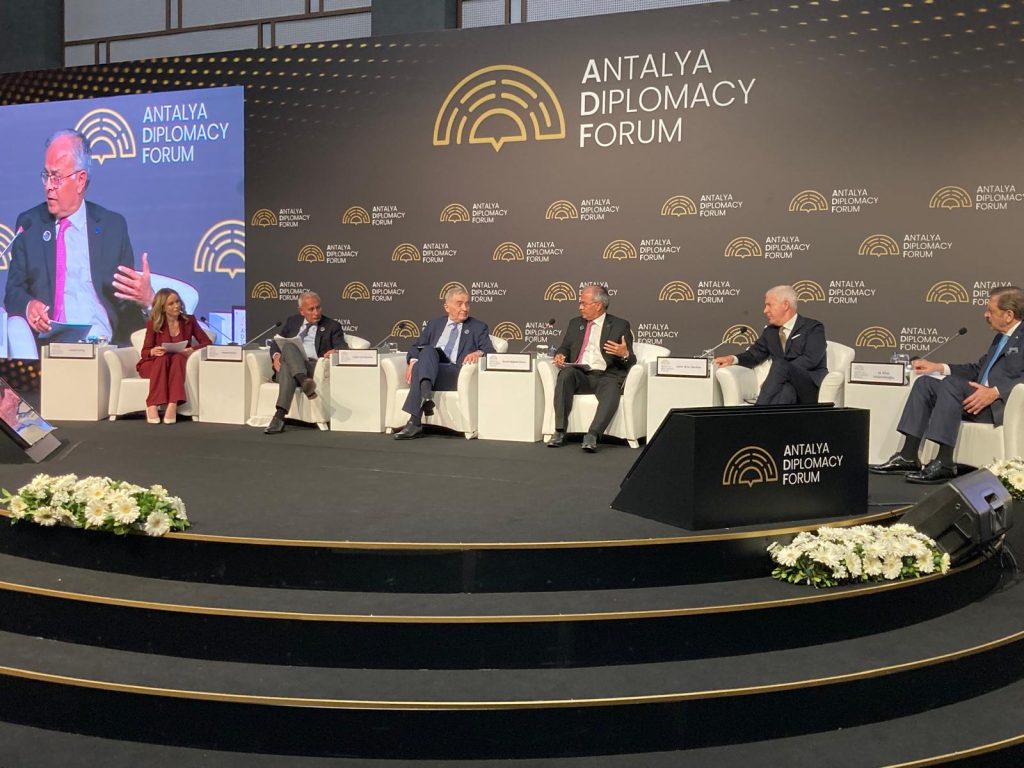
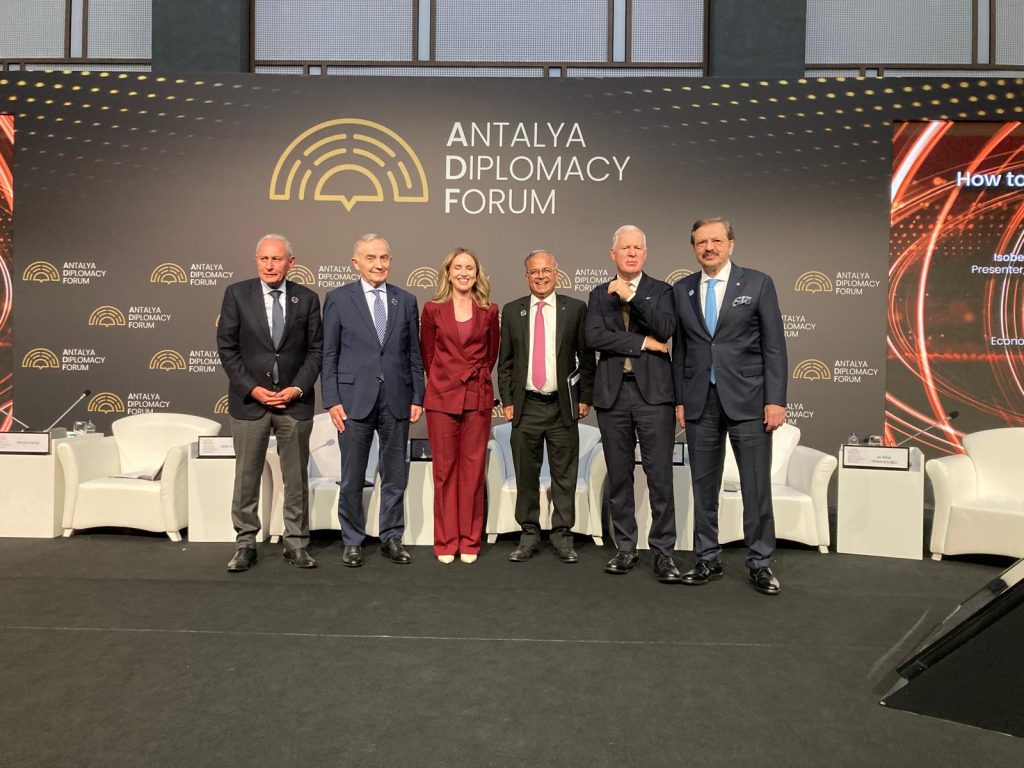
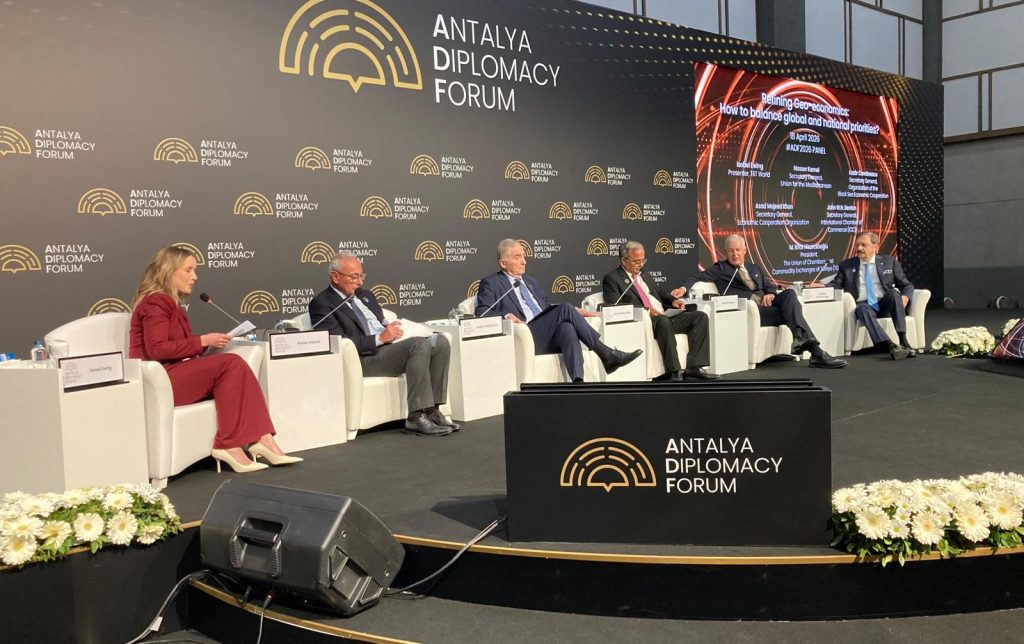
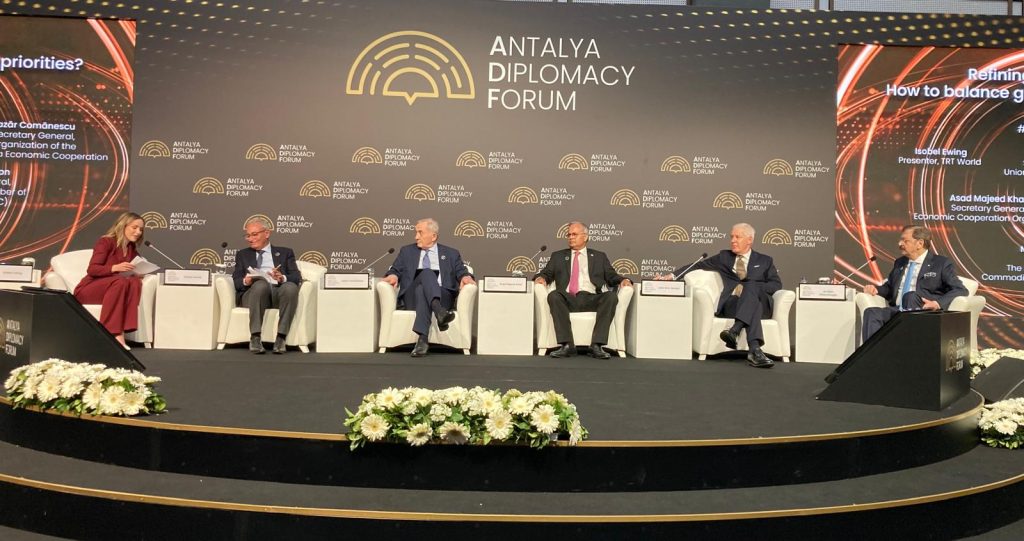
Secretary General of the Economic Cooperation Organization (ECO) Dr. Asad M. Khan participated at the Antalya Diplomacy Forum – 2026. Convened under the theme “Mapping Tomorrow, Managing Uncertainties,” and hosted by the Ministry of Foreign Affairs of the Republic of Türkiye, under the auspices of H.E. President Recep Tayyip Erdoğan, the Forum brought together leaders, policymakers, diplomats, academics, business experts, media and civil society representatives to explore how to best manage uncertainties and address pressing issues while preparing for future challenges.
Within the Forum, Dr. Khan participated at the panel: “Refining Geo-economics: How to balance global and national priorities?” The Panel explored how states and international economic and financial institutions can cooperate to balance national economic security policies with efforts to uphold an open, rule-based multilateral system for common good. The discussions sought to contribute to managing uncertainties and mapping tomorrow in a rapidly transforming geo-economic order, while supporting a multilateral system that remains sustainable, effective and resilient.
In his remarks Dr. Khan noted that the growing emphasis on regionalism and regional cooperation provides a prime opportunity for the Economic Cooperation Organisation and similar regional organisations to serve as central hub for trade and industrial collaboration, while ECO is responding to this challenge not only through policy coordination, but by strengthening its own analytical foundations — building the institutional capacity to generate the evidence-based strategies that shifting geo-economic conditions demand.
He expressed that from a political perspective, developing economies are required to adapt to the rewiring of global production and supply chain systems not only through economic reforms, but also through strategic positioning given the increasingly polarized global order. Hence, emerging and developing economies should actively engage in trade agreements, strategic partnerships, and investment deals to strengthen their position in the global economy. By doing so, they can present themselves as reliable and neutral partners in an increasingly divided global system. At the same time, it is essential to manage geopolitical risks by developing policies that safeguard against potential disruptions, including sanctions, trade interruptions, and political instability in partner countries, thereby ensuring greater resilience and continuity in economic engagement.
Secretary General further noted that if uncertainty in trade policy persists, global trade could become more fragmented, with the formation of competing blocs and increased use of tariffs, subsidies, and export controls. This would likely reduce efficiency and slow global economic growth, where firms may also restructure supply chains toward more localised or “trusted” partners, improving resilience but often at the cost of higher production expenses and reduced economies of scale. The effects are likely to be unevenly distributed, with larger economies better able to adapt through strong industrial policies, while smaller and developing economies risk being marginalised from global value chains. In this evolving environment, regional organizations can play a stabilizing role by fostering policy coordination, reducing trade frictions, and supporting trust-based economic cooperation among member states, he concluded.