Dushanbe – 23 September 2026
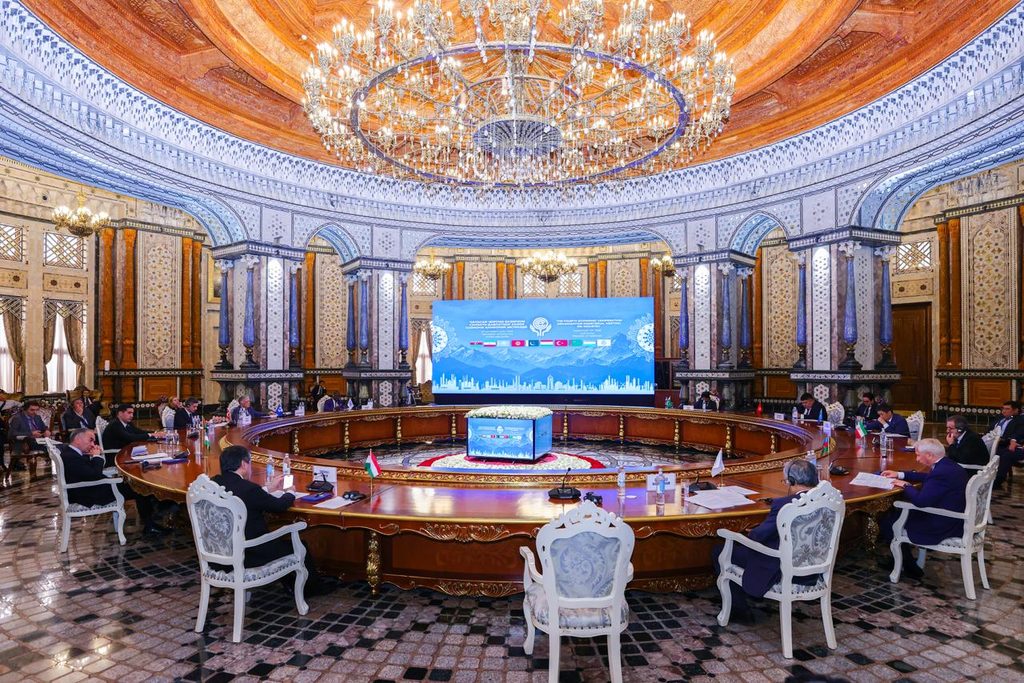
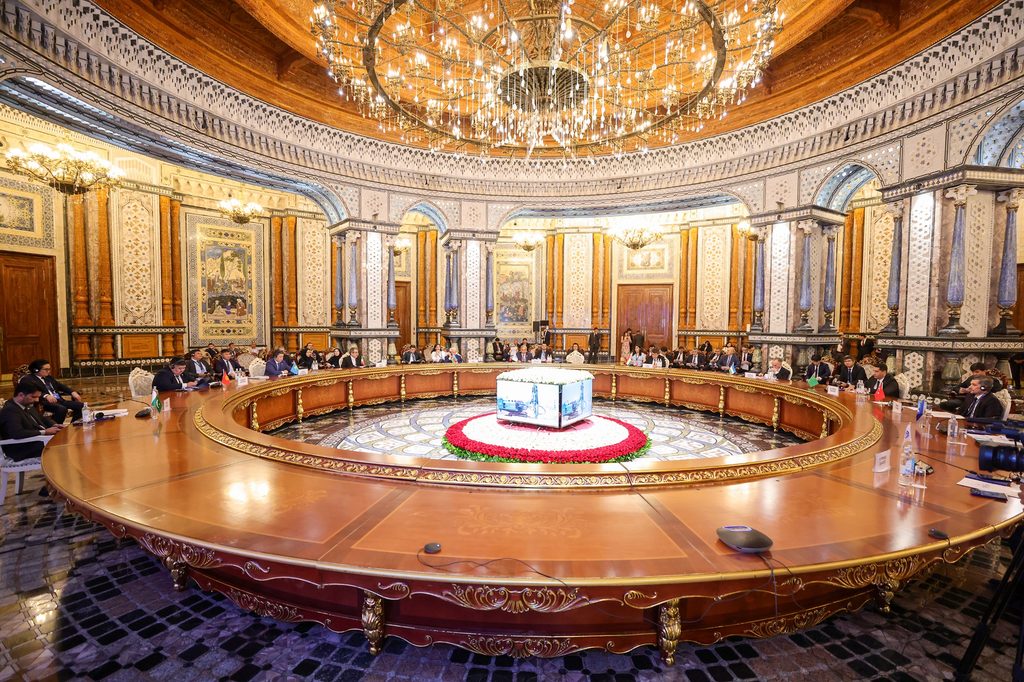
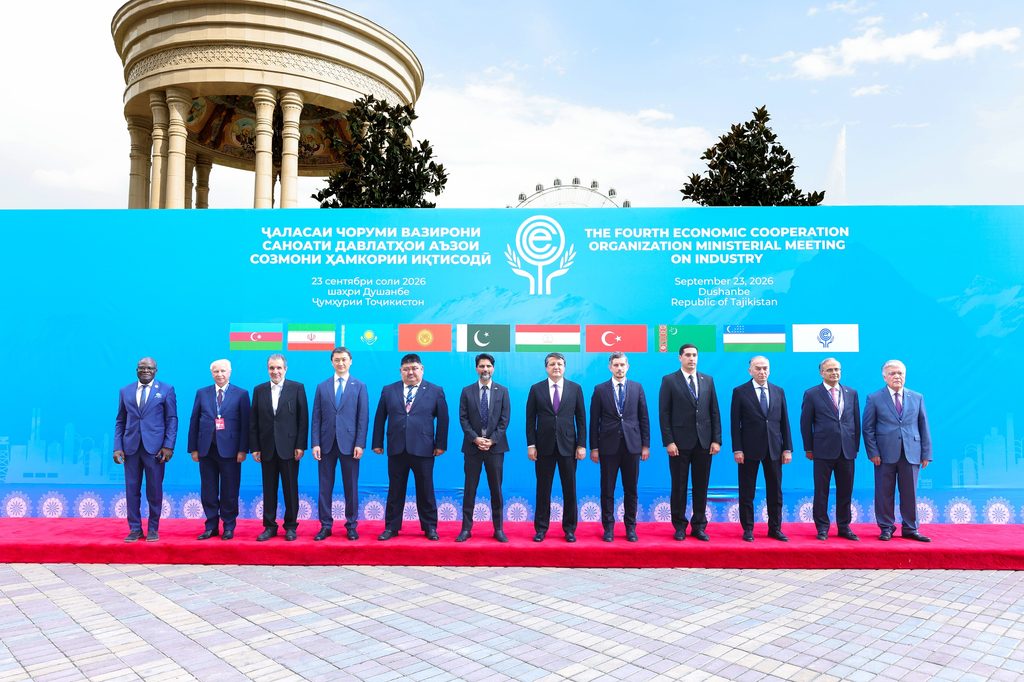
The Fourth ECO Ministerial Meeting on Industry was held on 23 September 2026 in Dushanbe, Republic of Tajikistan, following the Third High-Level Experts Group (HLEG) Meeting on Industry on 22 September. The Meeting marked the resumption of high-level ECO engagement on industry after a two-decade hiatus, giving renewed momentum to the regional industrial agenda.
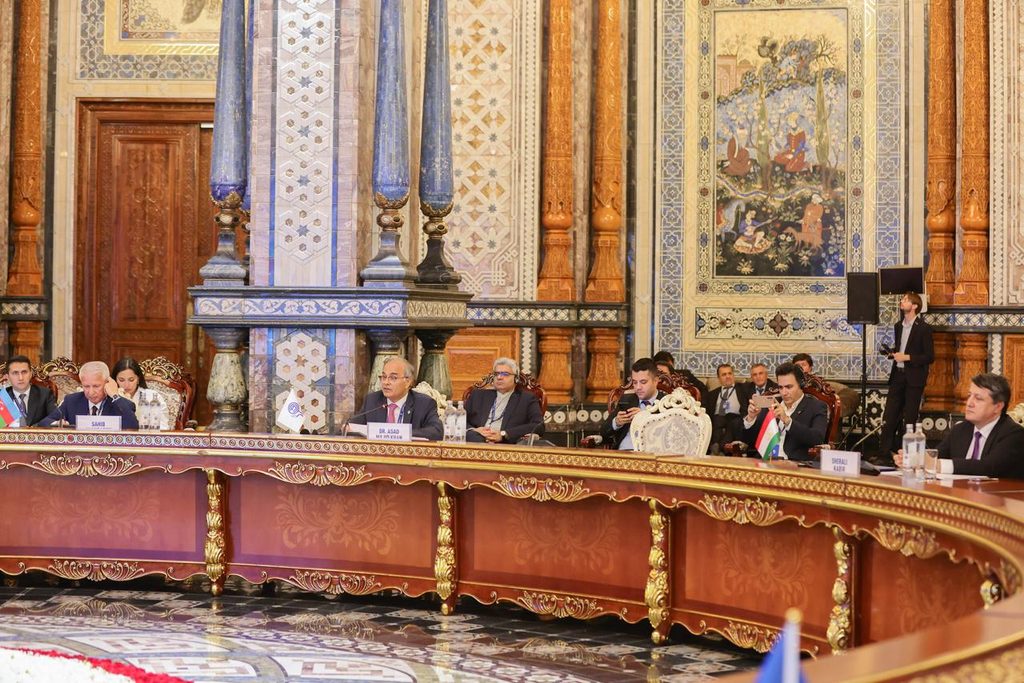
The Meeting, chaired by H.E. Mr. Sherali Kabir, Minister of Industry and New Technologies of the Republic of Tajikistan, brought together Deputy Ministers and Heads of Delegation from Azerbaijan, Iran, Kazakhstan, Kyrgyzstan, Pakistan, Türkiye, Turkmenistan, and Uzbekistan. Representatives of the Commonwealth of Independent States (CIS) and the United Nations Industrial Development Organization (UNIDO) also participated.
The Meeting was jointly inaugurated by H.E. Mr. Sherali Kabir, Minister of Industry and New Technologies of the Republic of Tajikistan, and H.E. Dr. Asad M. Khan, Secretary-General of ECO. The Secretary-General expressed appreciation to the Government of Tajikistan, particularly H.E. Mr. Sherali Kabir, for its warm hospitality, excellent arrangements and leadership in bringing high-level dialogue on industry back to the ECO agenda. He noted that the Meeting marked significant re-engagement after twenty years, presenting both an opportunity and a responsibility to advance the regional industrial agenda which is fundamental to the region’s economic future. He also called for a shift from dialogue to implementation, with greater emphasis on joint initiatives, regional partnerships and practical results.
A key outcome was the adoption of the Dushanbe Declaration on Revitalizing Regional Industrial Cooperation. The Declaration establishes a forward-looking framework focused on the agreed priority areas within the industry sector, including regional quality infrastructure, the nanotechnology network, industrial property rights, MSMEs and entrepreneurship, private-sector partnerships, and enhanced engagement with international partners, with a greater focus on advanced technologies and innovation. It also calls for the renewal and consolidation of the existing Regional Strategy on Industrial Cooperation and related Plans of Action into a coherent framework aligned with the Strategic Goals of Economic Coperation-2035.
Deputy Ministers and Heads of Delegation reaffirmed their commitment to practical cooperation, addressing industrial bottlenecks and promoting sustainable development. They also exchanged national experiences and highlighted opportunities for cooperation in emerging technologies, innovation, investment and industrial partnerships.