Tehran, 19 October 2026
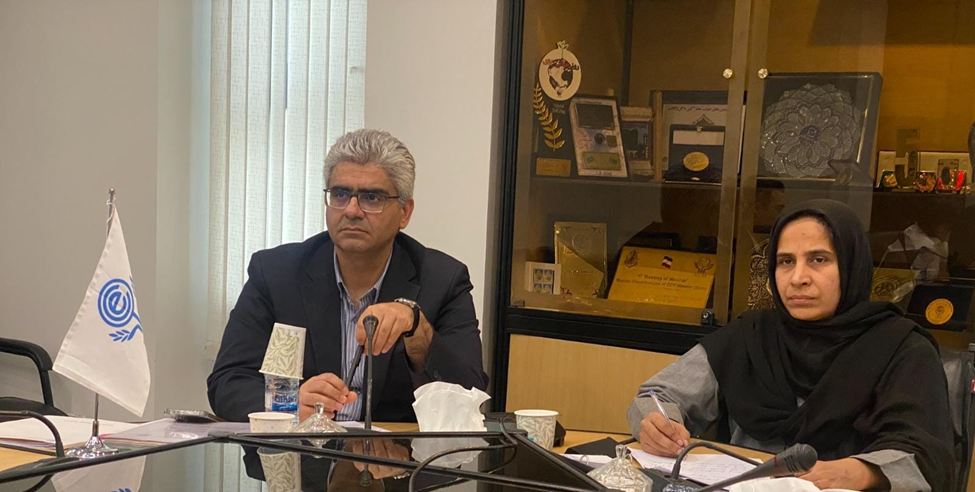
The Economic Cooperation Organization (ECO) convened the 2nd Informal Consultative Session of the Technical Negotiation Committee (TNC) on the Revision of the ECO Trade Agreement (ECOTA) on 19 October 2026. The meeting brought together representatives of ECO Member States (both ECOTA contracting and non-contracting Members) to exchange views on the Concept Note submitted by the Islamic Republic of Pakistan and to consider possible approaches for the negotiations process.
The opening remarks were delivered by Deputy Secretary General of ECO, Dr. Behzad Saberi Ansari. Welcoming the growing participation of Member States, he emphasized that the purpose of these informal and friendly consultative sessions is to facilitate the exchange of ideas among the relevant technical authorities of Member States and provide an opportunity for participants to hear one another’s views, perspectives and concerns, without creating any commitments for any of the participating governments. He noted that the previous informal session had proven highly useful in bringing the parties’ views closer together, expressing the hope that the present session, as well as subsequent meetings, would likewise contribute effectively to advancing the work.
After the opening remarks, Ms. Amina Batool, Director, Trade and Investment of the ECO Secretariat, presented the key elements of Pakistan’s Concept Note and outlined the proposed framework, including the possible areas of cooperation under the three thematic protocols and the proposed approach to market access and tariff treatment.
The session focused on the Concept Note on the new Trade Agreement submitted by Pakistan, which proposes a modern and evolved architecture and scope in comparison to ECOTA. The Concept Note envisages a new-generation ECO Trade Agreement based on a Framework Agreement complemented by thematic protocols, with a view to creating a more flexible, progressive and comprehensive framework for regional trade and economic integration.
Representatives of ECO Member States exchanged preliminary views on the Concept Note and shared their perspectives on the proposed architecture, scope and possible modalities for the new agreement. The discussion also provided an opportunity for Member States to raise issues for further consideration and, where appropriate, to put forward alternative or additional proposals.
In closing, the Deputy Secretary General noted that, in accordance with the previously approved work plan, the Secretariat had been tasked with preparing a zero draft of the Agreement. He therefore invited the representatives of Member States to formally communicate to the Secretariat any comments, proposals or observations of their respective governments, so that the drafting process could proceed at the earliest opportunity, duly taking into account the views of Member States.