Antalya – 9 November 2026
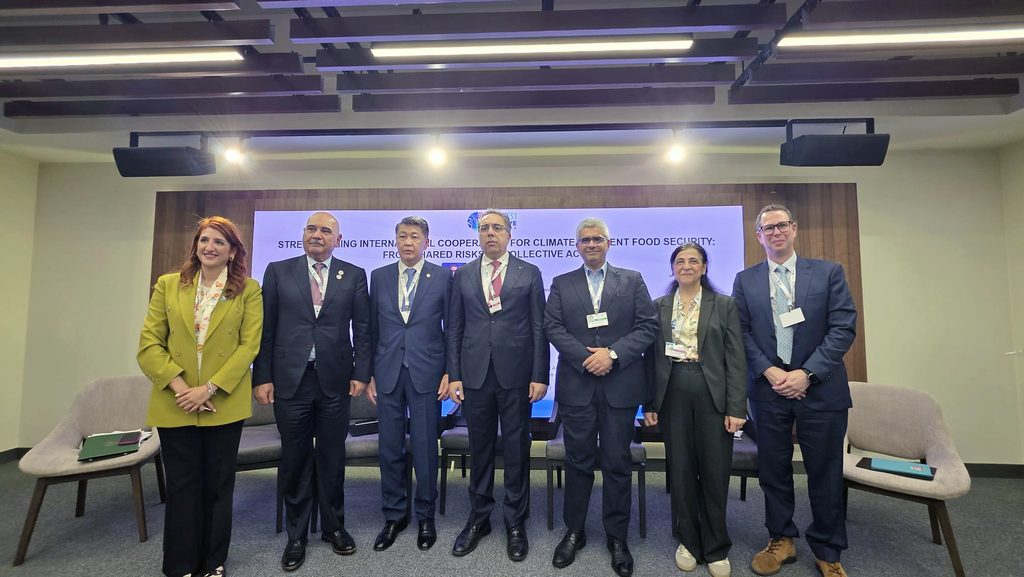
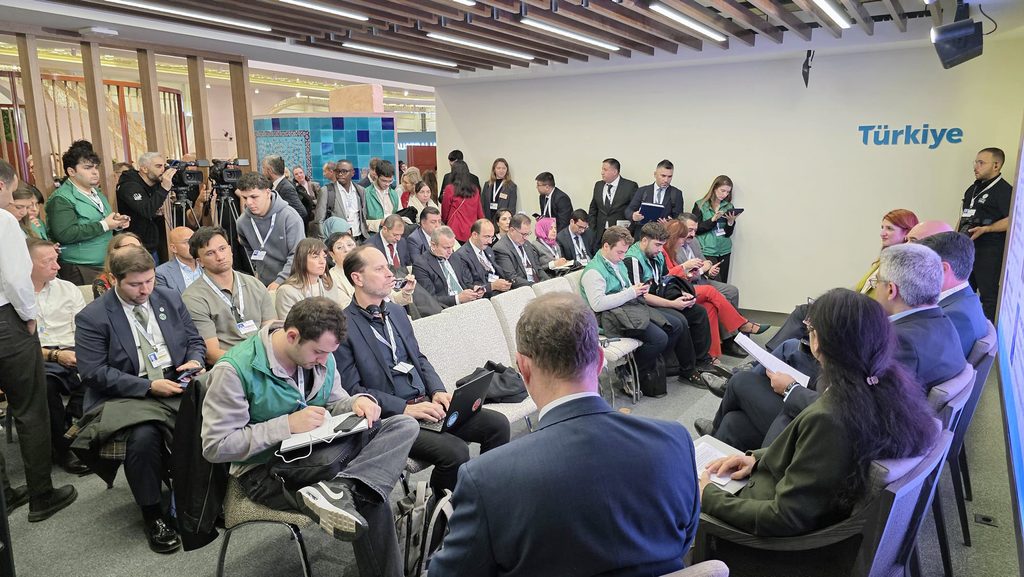
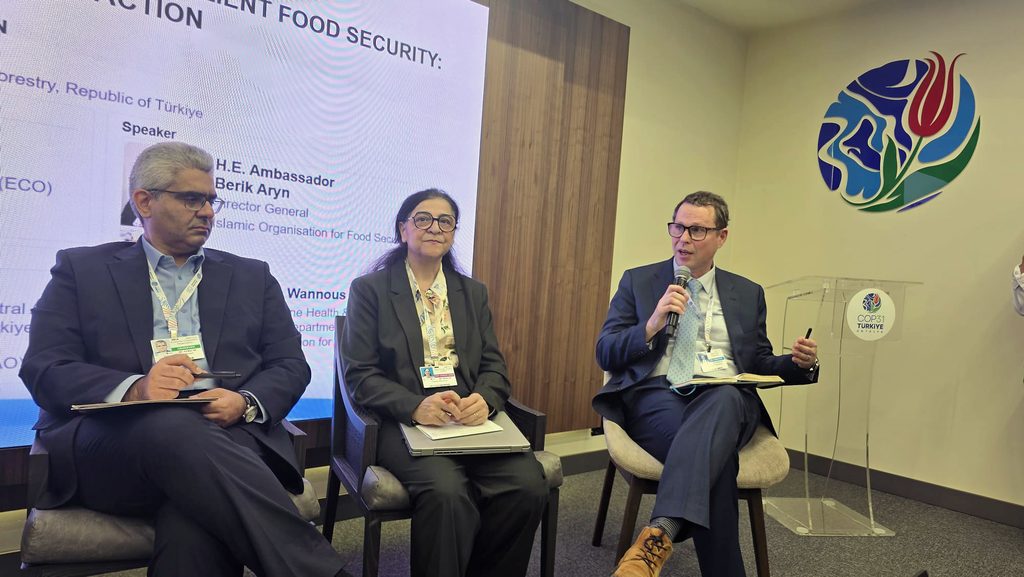
The Economic Cooperation Organization (ECO), in collaboration with the Islamic Organization for Food Security (IOFS) and the United Nations World Food PProgramme (WFP), organized a high-level panel discussion entitled “Strengthening International Cooperation for Climate-Resilient Food Security: From Shared Risks to Collective Action” on 9 November 2026, on the margins of the 31st Conference of the Parties (COP31) to the United Nations Framework Convention on Climate Change (UNFCCC), in Antalya, Türkiye.
The event brought together senior representatives of regional and international organizations to exchange perspectives on strengthening international cooperation in addressing climate-related threats to food security. The event featured opening remarks by Prof. Dr. Ahmet Gümen Deputy Minister of Agriculture and Forestry of the Republic of Türkiye.
In his intervention, ECO Deputy Secretary General Dr. Behzad Saberi Ansari emphasized the importance of regional cooperation in addressing the increasingly interconnected and transboundary impacts of climate change on agriculture and food security. He underlined that climate-related challenges, including droughts, floods, water scarcity and disruptions to agricultural production and supply chains, require coordinated responses extending beyond national boundaries.
Highlighting ECO’s role as a regional platform for policy dialogue, coordination and cooperation among its Member States, Dr. Saberi referred to the Organization’s efforts to strengthen regional food security cooperation, including through the ECO Regional PProgrammefor Food Security (ECO-RPFS) and the ECO Regional Coordination Centre for Food Security (ECO-RCCFS) in Ankara. He emphasized the potential of these mechanisms to facilitate information exchange, institutional coordination, capacity-building and joint responses to emerging food security challenges.
He also highlighted the contribution of the ECO Seed Association (ECOSA) to regional food security through promoting cooperation in the seed sector. He underscored the importance of improving access to quality seeds, encouraging the development and use of climate-resilient seed varieties, and facilitating regional seed trade as essential elements of sustainable agricultural production and climate adaptation.
Dr. Saberi further stressed the need to move beyond reactive crisis management towards anticipatory and preventive approaches by strengthening the link between early warning systems and timely action. In this context, he highlighted the opportunities offered by digital technologies, artificial intelligence, satellite-based monitoring and improved climate and agricultural data to enhance risk assessment, preparedness and decision-making.
He also drew attention to the importance of mobilizing technical and financial resources before climate-related shocks escalate into major food security crises. In this regard, he underscored the complementary roles of ECO, IOFS, WFP and FAO in advancing climate-resilient food security, emphasizing the value of combining regional coordination mechanisms with international expertise and operational capacities.
The panel also underscored the importance of strengthening cooperation among relevant international and regional organizations to address the growing challenges of climate change and food insecurity. Particular emphasis was placed on fostering institutional partnerships, sharing knowledge and expertise, and promoting coordinated initiatives to translate common priorities into practical actions for more resilient and sustainable food systems.