20 November 2026 – Bangkok, Thailand
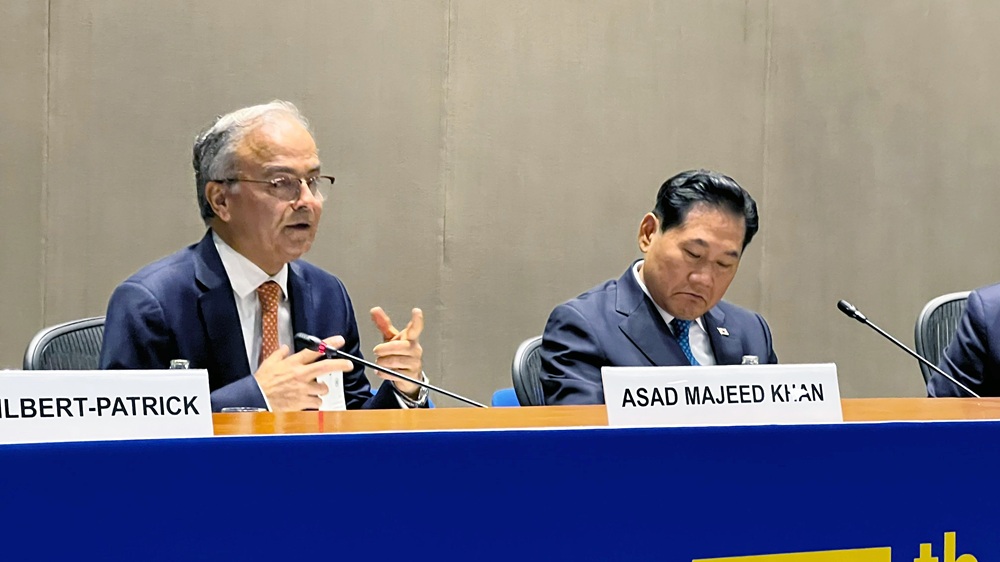
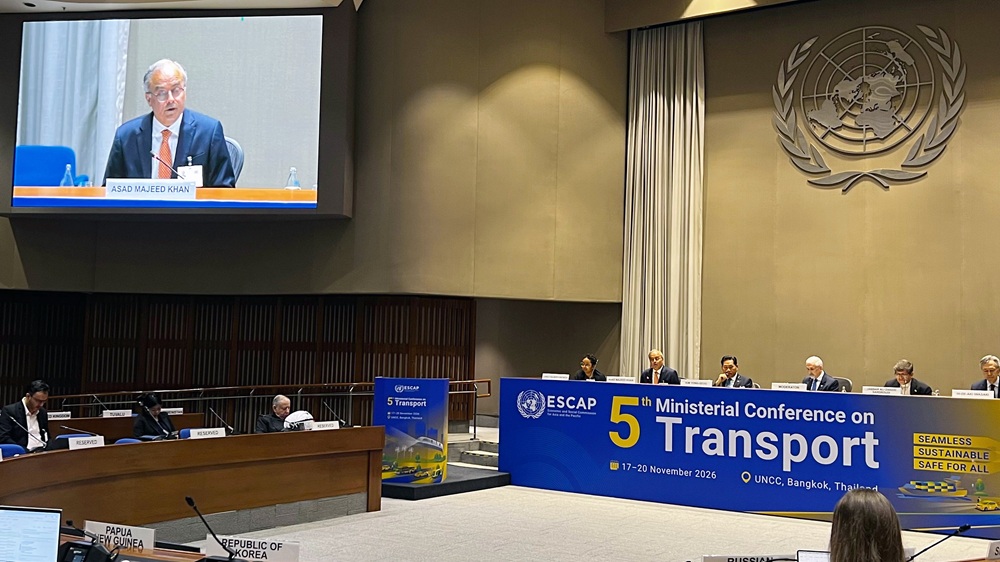
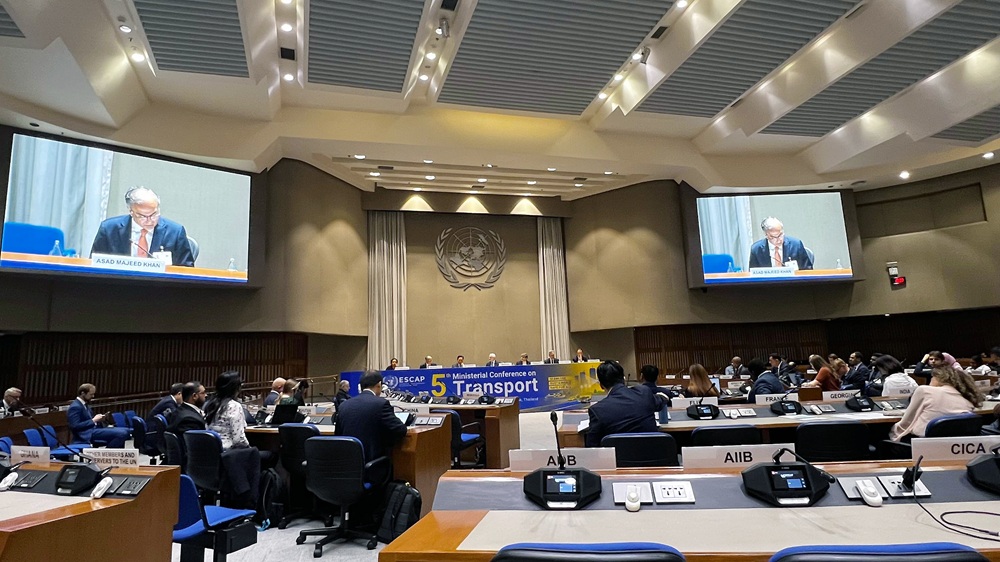
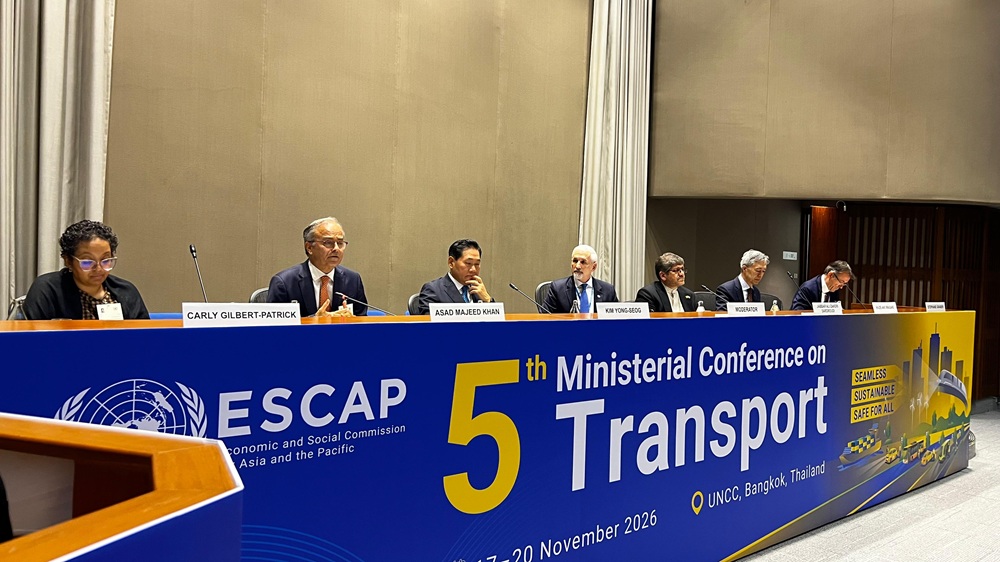
The ECO Secretary-General, Ambassador Asad M. Khan, participated in the High-Level Roundtable on “Delivering Impact through Partnerships: Mobilizing Collective Action for Sustainable Transport in Asia and the Pacific,” held on the second day of the Ministerial Segment of the 5th ESCAP Ministerial Conference on Transport.
The Roundtable aimed at exploring how diverse stakeholders can work together to accelerate the implementation of the new Regional Action Programme for Sustainable Transport Development in Asia and the Pacific for the period 2027–2031.
The discussions underscored the importance of partnerships in mobilizing resources, strengthening institutional and technical capacities, fostering innovation, and translating shared commitments into tangible action. They also brought together a diverse range of development partners and stakeholders that countries can engage to address common transport challenges and advance regional connectivity.
Key areas of discussions included financing and investment, regional and interregional cooperation, regulatory harmonization and interoperability, low-emission and inclusive mobility, and collaboration with the private sector and industry.
In his remarks, the ECO Secretary-General emphasized the catalytic, coordinating and enabling functions that regional organizations play in helping member countries strengthen cross-border connectivity, enhance transport and trade facilitation, and develop more resilient and efficient transport corridors in support of sustainable development.
He added that the greatest contribution of regional organizations like ECO lies in bringing countries together around shared priorities, promoting policy and regulatory harmonization, mobilizing investment, coordinating infrastructure development, and advancing integrated regional approaches to sustainable transport.
The Secretary-General explained the main pillars of the recently adopted the “ECO Strategy on Sustainable and Resilient Transport” and highlighted the imperative of partnership in financing and digitalization of the transport sector. He further emphasized the need to engage the private sector in the different layers of the connectivity cycle.
The 5th ESCAP Ministerial Conference on Transport provided the ECO delegation, headed by the Secretary General, a valuable opportunity to advance ECO outreach under its connectivity agenda.
Signing the new MoU with ESCAP, joint side event on the implementation of the Awaza Programme of Action in the ECO Region, bilateral talks with the senior officials from the ECO Member States and partner organizations, along with informal exchanges with other stakeholders are expected to enhance the ECO Secretariat’s capacities in pursuing its mandates through enhanced partnerships with the United Nations system and regional stakeholders.