17 March 2026
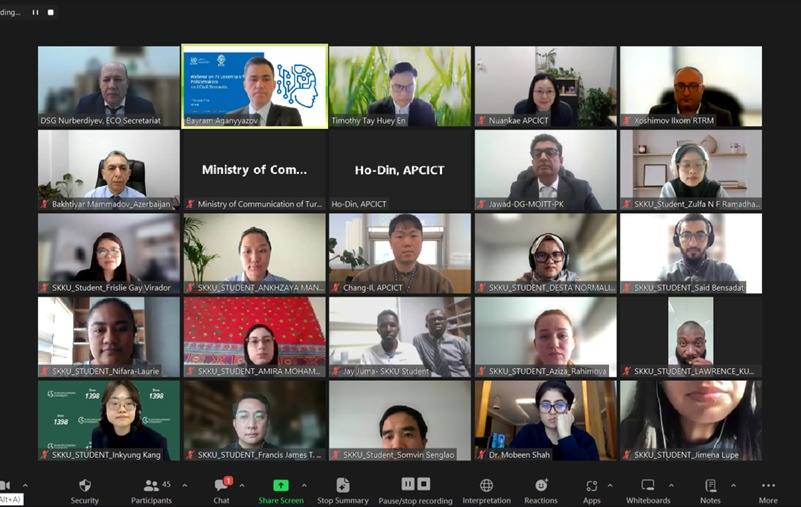
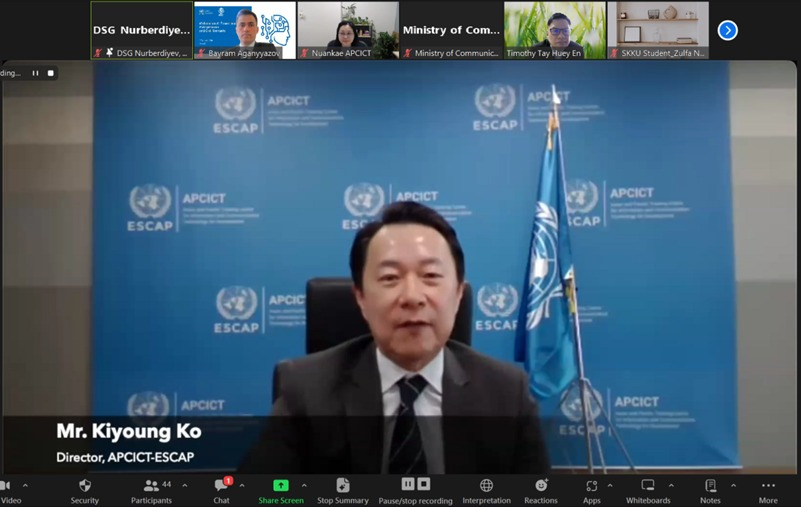
The Economic Cooperation Organization (ECO), in cooperation with the Asian and Pacific Training Centre for ICT for Development (APCICT) of the UNESCAP, organized a webinar titled “Artificial Intelligence Essentials for Policymakers and Civil Servants” on 17 March 2026. The event brought together government officials, policymakers, and experts from ECO Member States to exchange knowledge and perspectives on the growing role of artificial intelligence (AI) in public governance and economic development.
The webinar aimed to strengthen the understanding of AI governance among policymakers and civil servants by highlighting global trends, regulatory developments, and practical approaches for responsible AI adoption. Participants discussed the strategic implications of AI in the context of digital transformation and the emerging Industry 5.0 paradigm, which emphasizes human-centric and sustainable technological innovation.
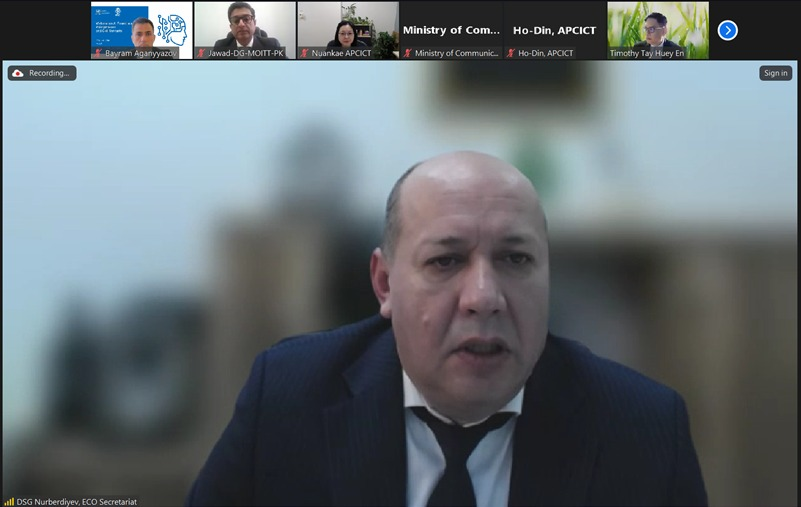
In his opening remarks, H.E. Amb. Silapberdi Nurberdiyev, Deputy Secretary General of the ECO emphasized the importance of building institutional capacity to enable governments to harness the benefits of AI while addressing its potential risks. He noted that responsible AI governance requires effective regulatory frameworks, informed policymaking, and international cooperation. He also informed that the webinar forms part of the preparatory process for the 4th ECO Ministerial Meeting on ICT, scheduled to be held in 2026 in Islamabad, Pakistan.
The discussions also contributed to the ongoing development of a new ECO regional strategy on ICT, which will address emerging technologies and digital innovation. Artificial intelligence is expected to be one of the key focus areas of this strategy, reflecting its growing importance for economic competitiveness, industrial development, and public service modernization.
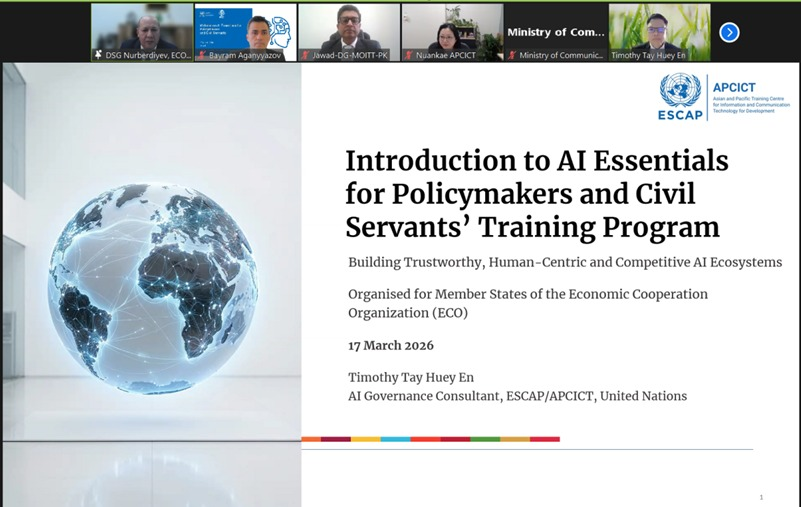
During the session, an expert presentation delivered by Mr. Timothy Tay from APCICT provided an overview of global AI governance frameworks and emerging regulatory approaches. The presentation addressed key international initiatives, including the UNESCO Recommendation on the Ethics of Artificial Intelligence, the OECD AI Principles, and other internationally recognized standards aimed at promoting safe, secure, and trustworthy AI systems.
Representatives of ECO Member States have also briefly outlined their national ICT, digital transformation, and AI policy initiatives.
The webinar concluded with a discussion on potential areas for future cooperation, including knowledge exchange, policy capacity building, and regional collaboration in AI governance.
The ECO reaffirmed its commitment to supporting Member States in advancing digital transformation and promoting the responsible use of emerging technologies for sustainable development across the ECO region.