Awaza, Turkmenistan, 6 August 2025
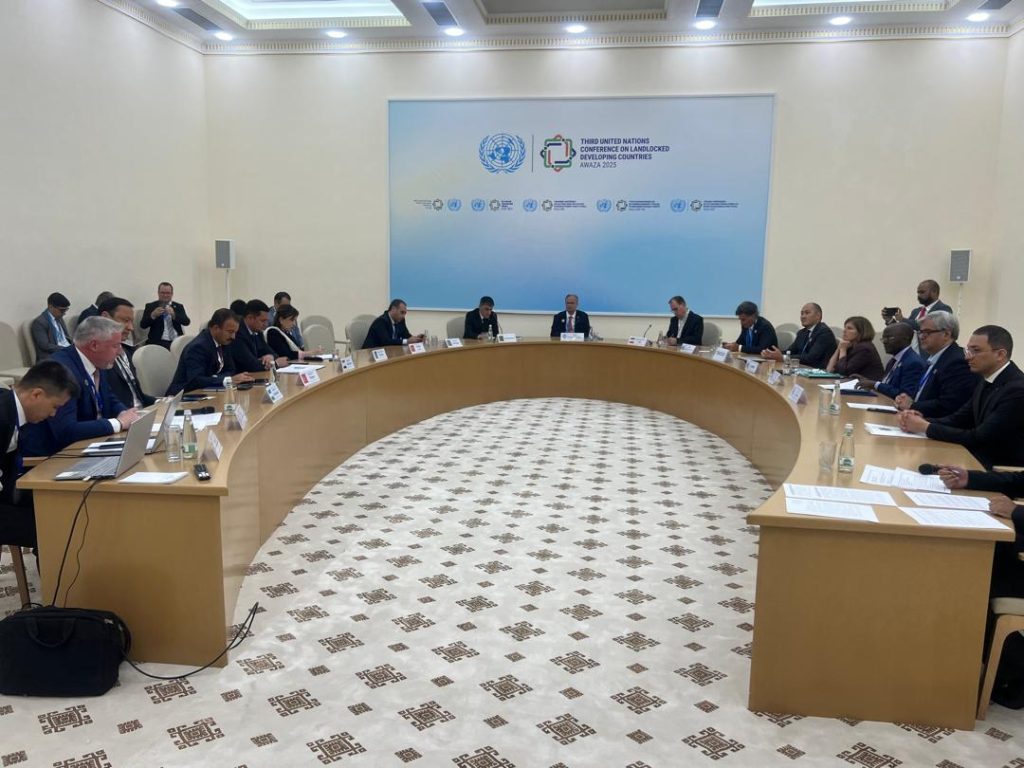
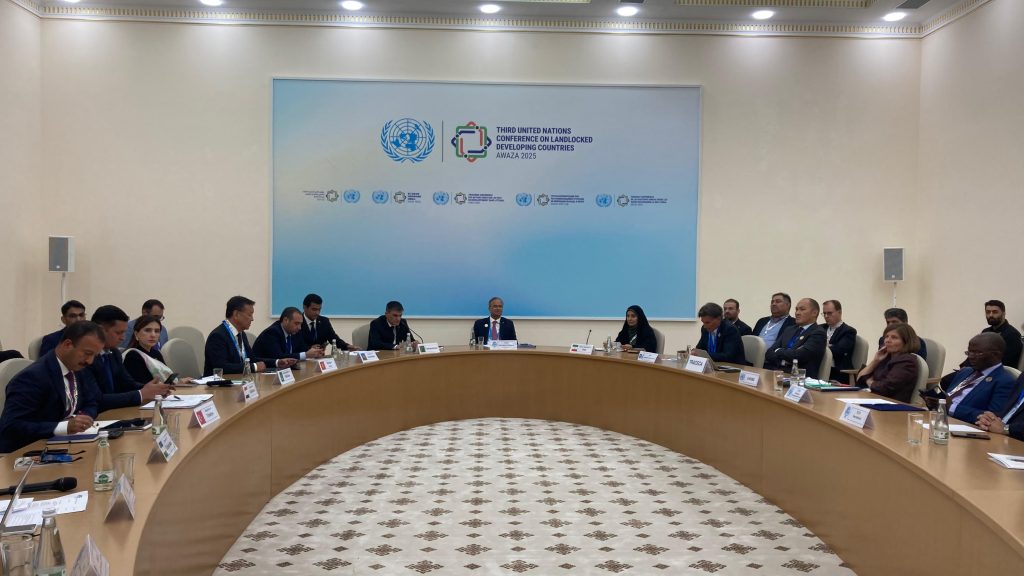
The Economic Cooperation Organization (ECO) hosted a high-level Ministerial Side Event on the margins of the Third United Nations Conference on Landlocked Developing Countries (LLDC3) in Awaza, Turkmenistan, under the theme “ECO, implementation of the Awaza Program of Action 2024–2034.”
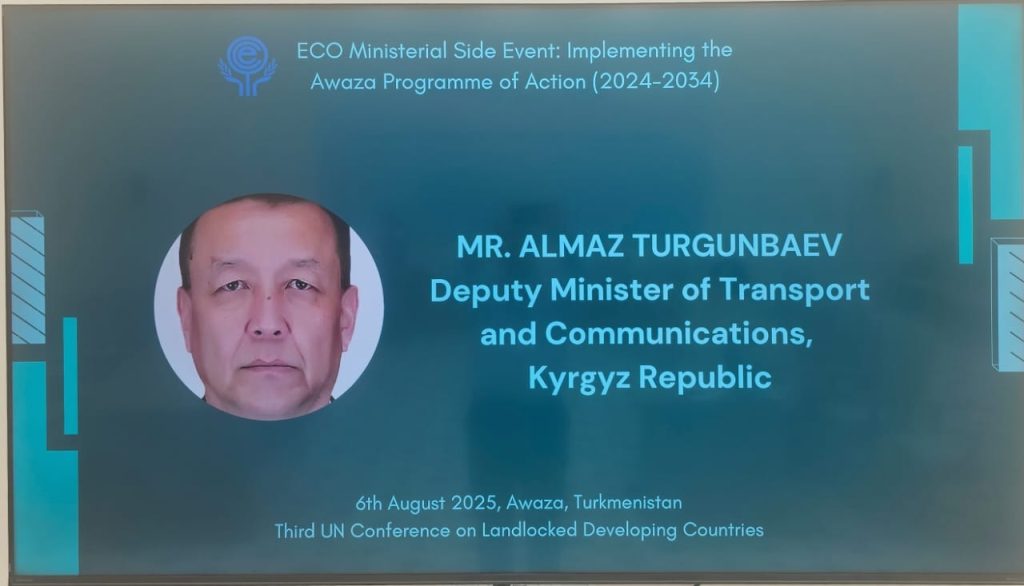
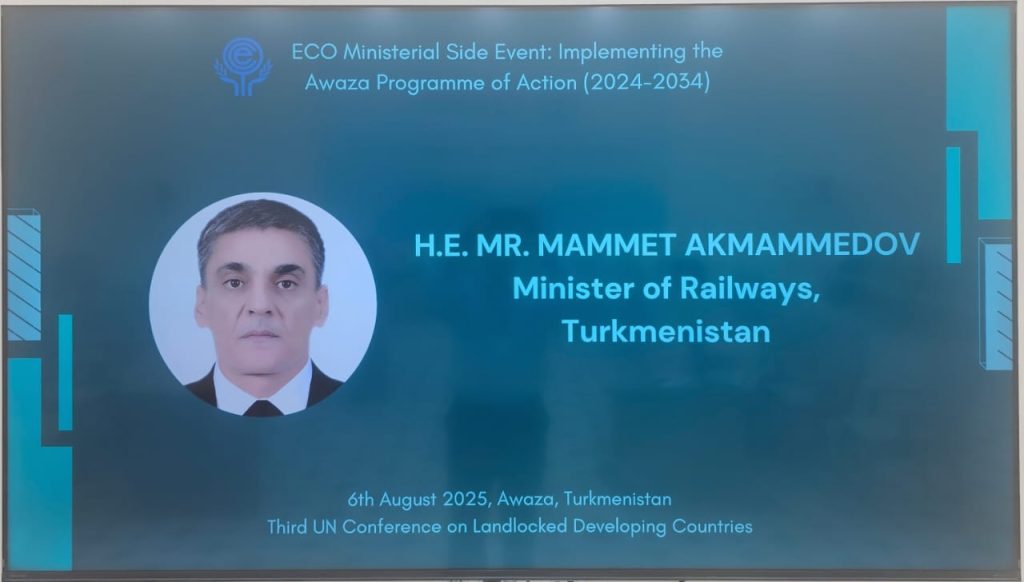
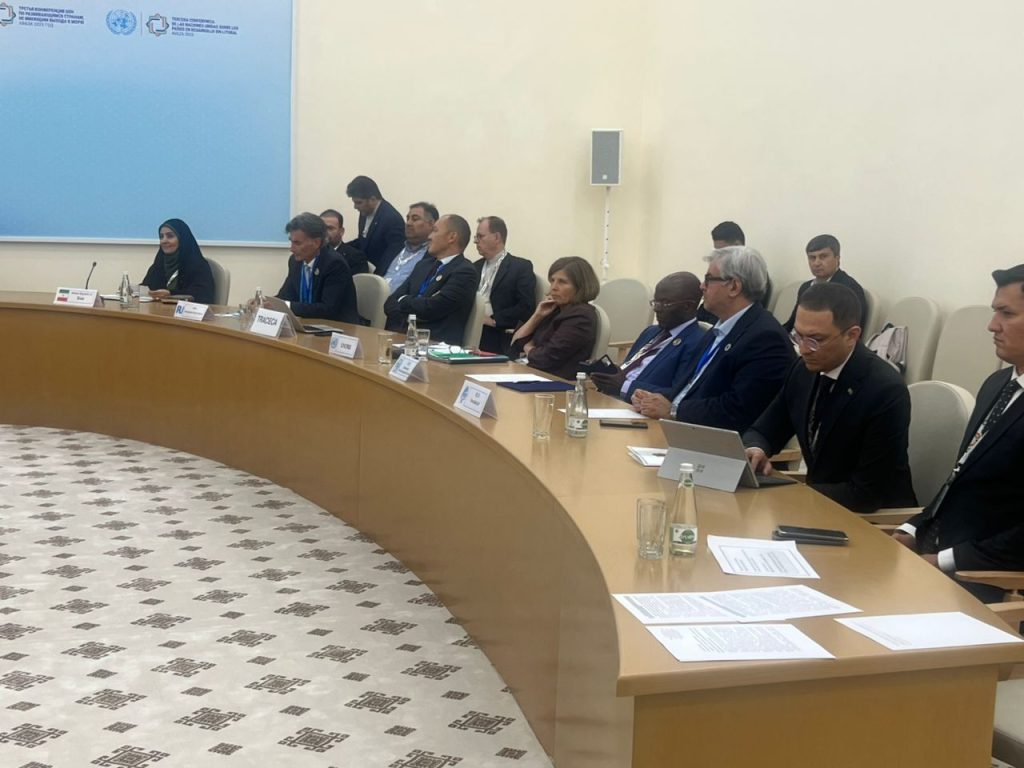
H.E. Mr. Mammet Akmammedov, Minister of Railways of Turkmenistan, H.E. Dr. Farzaneh Sadegh, Minister of Roads and Urban Development, Islamic Republic of Iran, and Mr. Almaz Turgunbaev, Deputy Minister of Transport and Communications of the Kyrgyz Republic, Mr. Umberto de Pretto, IRU Secretary General, and Mr. Asset Assavbayev, Secretary General of the Intergovernmental Commission (IGC) TRACECA spoke at the event, while senior officials and representatives of international organizations and financial institutions also deliberated on strategies for enhancing regional cooperation in line with the newly adopted Awaza Program of Action (APA) for 2024–2034.
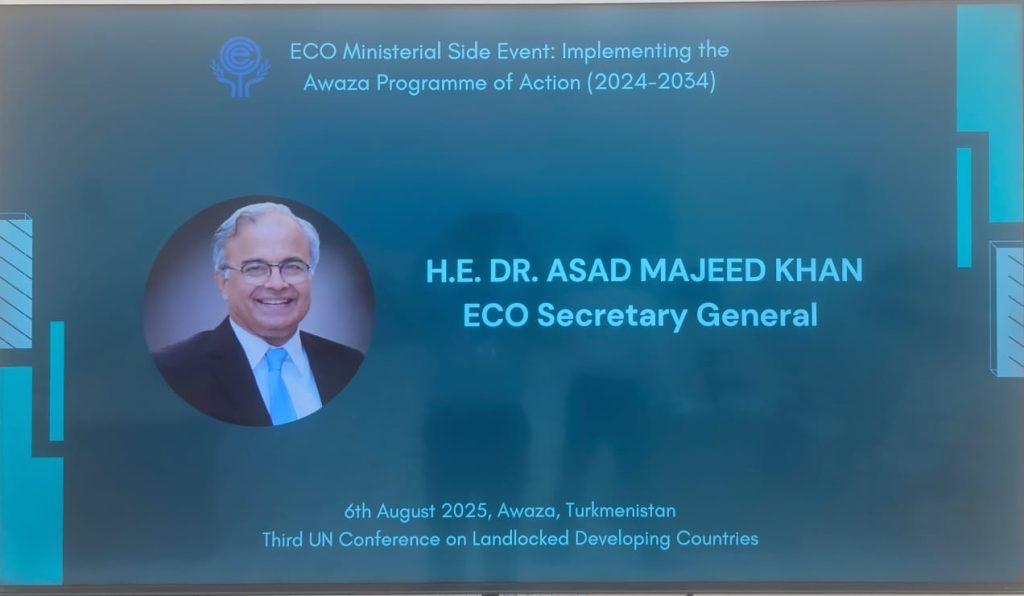
In his opening remarks, Dr. Asad M. Khan, Secretary General of ECO, highlighted the Organization’s commitment to aligning its strategic vision with the APA to accelerate sustainable development and strengthen resilience across its ten member states, seven of which are landlocked. He underlined ECO’s priorities in promoting trade facilitation, enhancing transport and digital connectivity, mobilizing financing for infrastructure, and advancing climate-resilient development.
He also emphasized the challenges facing landlocked developing countries in accessing markets, which have been exacerbated by global events. The event highlighted the importance of the Awaza Programme of Action (APA) 2024-2034 as a framework for sustainable growth and regional cooperation among ECO member states, especially given that seven of them are LLDCs.
The Secretary General further called for increased international support for LLDCs, particularly in climate finance, to aid implementation of the APA and build resilience against environmental challenges.
The meeting featured interventions from the distinguished speakers from ECO Member States and partner organizations. Participants underscored the importance of integrating digitalization, trade facilitation, climate resilience, and sustainable transport as central pillars of regional cooperation. The exchange of best practices and innovative approaches was emphasized as essential to ensuring the success of APA over the next decade.
The session concluded with a reaffirmation of ECO’s role as a pivotal platform for advancing the collective interests of its member states, particularly landlocked developing countries, in partnership with the United Nations system and international stakeholders.