Astana, 23 April 2026
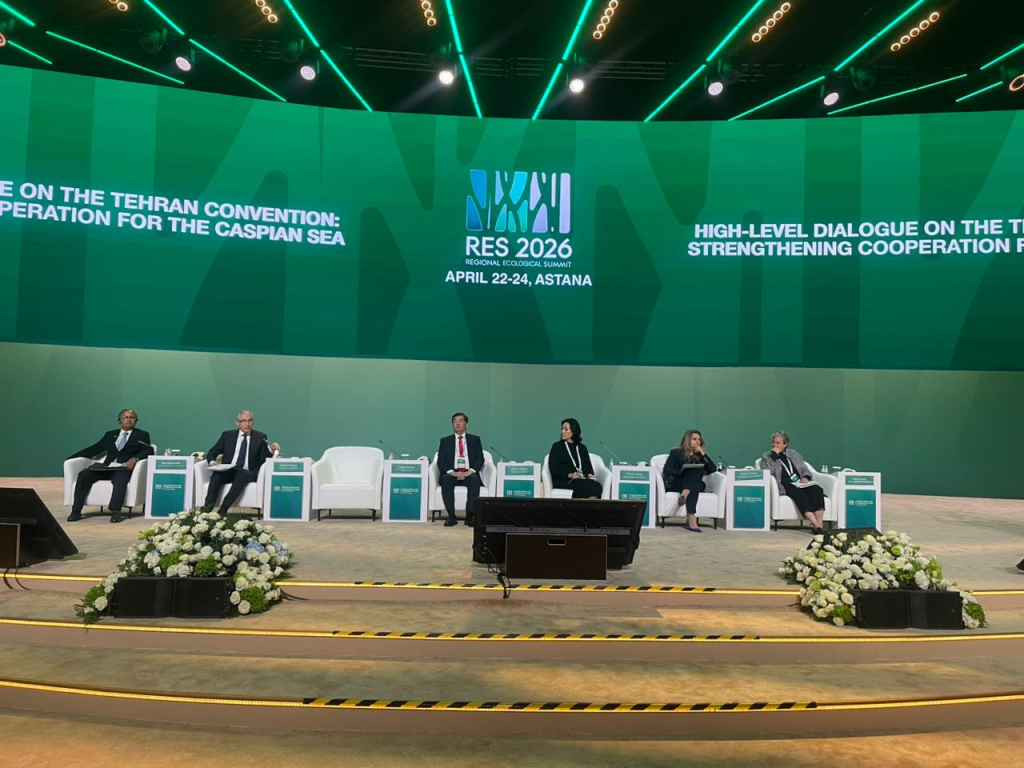
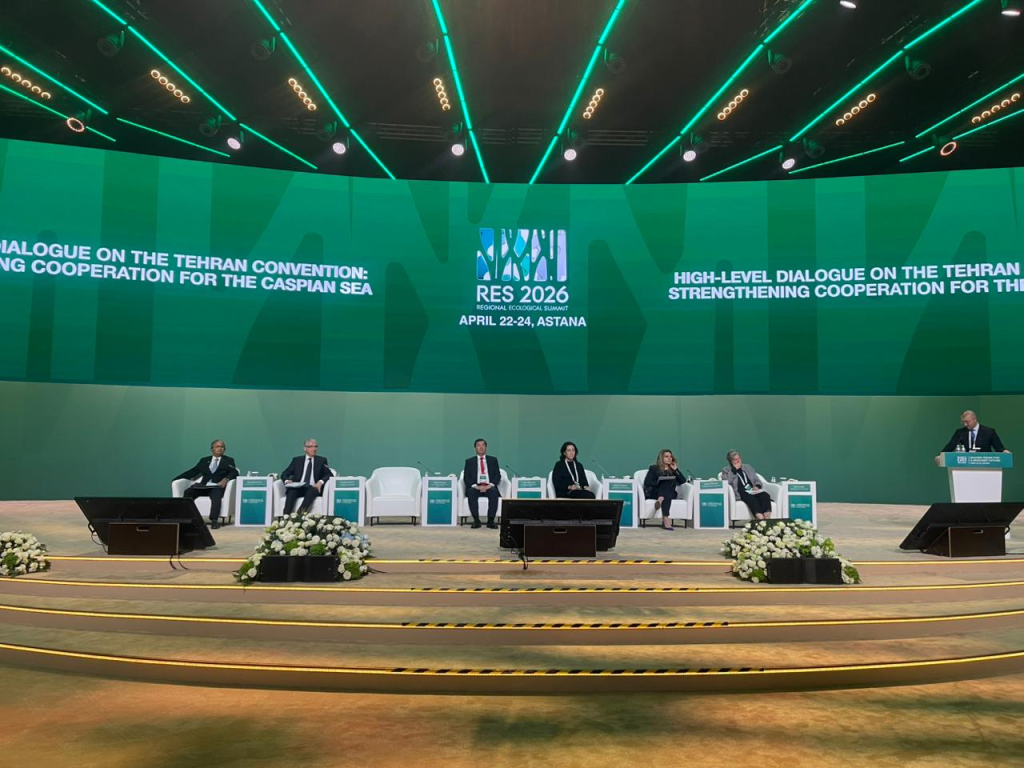
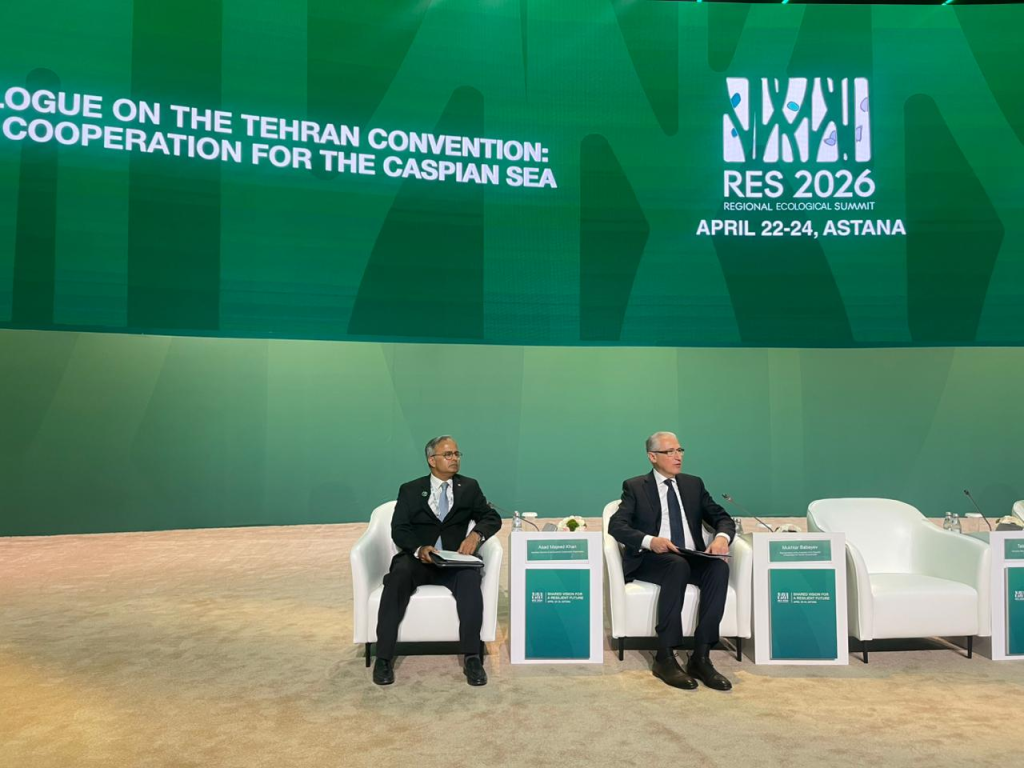
The Secretary-General of the Economic Cooperation Organization (ECO), Dr. Asad M. Khan, delivered a statement at the High-Level Dialogue on the Tehran Convention, held on the sidelines of the Regional Ecological Summit 2026 in Astana. Speaking under the theme “Shared Waters, Shared Prosperity: Turning Caspian Environmental Crisis into Regional Cooperation”. Dr. Khan called for urgent collective action to address the rapid decline of the Caspian Sea.
The Secretary-General noted that the Caspian is not only an ecological treasure but also a vital artery for trade, energy, and livelihoods across the ECO region. Four of ECO’s ten Member States are Caspian littoral states, while the remaining six depend on transboundary connectivity through the Caspian basin.
Dr. Khan highlighted a striking irony: while much of the world worries about rising seas, the Caspian is shrinking. He warned that water stress is at the center of the region’s environmental challenges. Land degradation, desertification, droughts, and floods further compound the region’s vulnerability.
Economically, the Caspian’s decline is already reducing port accessibility, raising transport costs, and disrupting supply chains for energy, grain, and manufactured goods. Fisheries – including sturgeon that produce the world’s caviar – are under threat, while exposed seabeds generate salt-laden dust storms that degrade agricultural soils and harm public health hundreds of kilometers inland, affecting even non-coastal ECO members such as Afghanistan, Uzbekistan, and the Kyrgyz Republic.
Dr. Khan reaffirmed ECO’s support for the Tehran Convention and noted that ECO’s mandate is to foster political commitment, regional cooperation, and shared investment frameworks. He concluded that “the Caspian’s fate is a test of our ability to act together.” “No single country can reverse its decline alone. Let us leave Astana with a clear message: cooperation is not an option; it is the only path.”