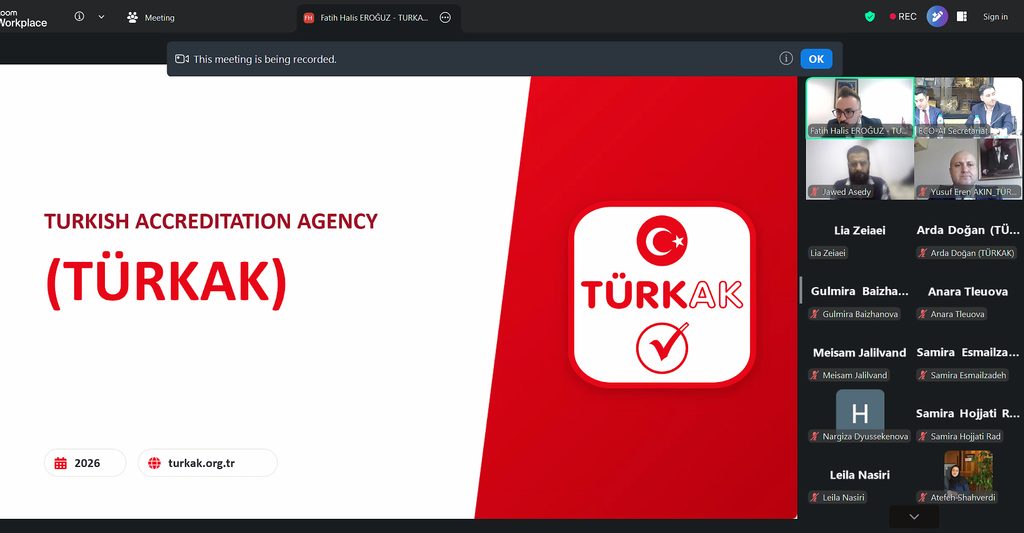
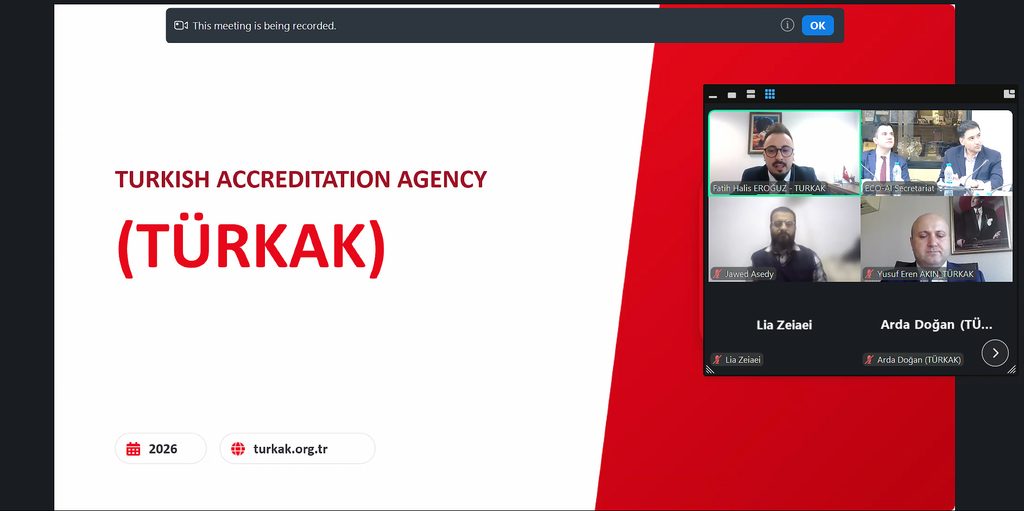
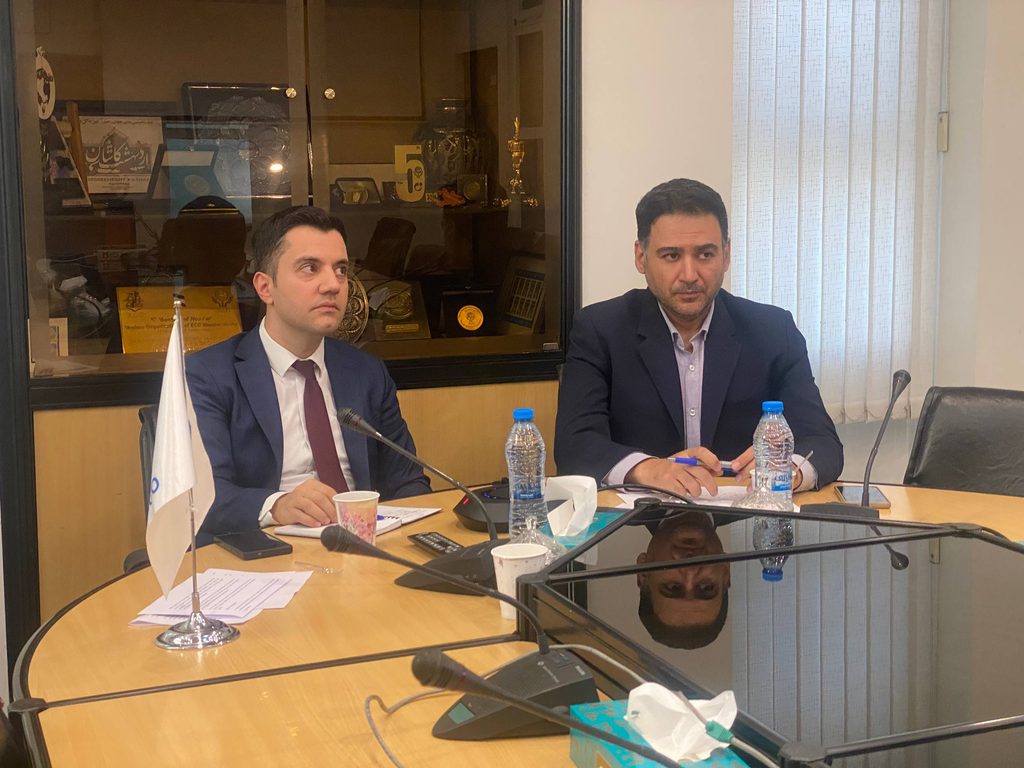
On 25 November 2026, the Turkish Accreditation Agency (TÜRKAK) organized an online technical workshop on accreditation within the framework of the ECO Regional Institute for Standardization, Conformity Assessment, Accreditation and Metrology (ECO-RISCAM). The workshop brought together experts from ECO Member States, including Afghanistan, Iran, Kazakhstan and Türkiye, to exchange knowledge, expertise and national experiences.
Organized in response to the request of the 36th Meeting of the ECO Regional Planning Council and in line with the 2026 ECO Work Programme, the workshop aimed to strengthen regional cooperation in quality infrastructure, one of the agreed priority areas of ECO industrial cooperation, with accreditation constituting one of its key pillars.
The workshop opened with remarks by Mr. Can Aygül, Director for Agriculture and Industry at the ECO Secretariat, and Mr. Yusuf Eren Akın, Head of Audit, Training, Projects and Accreditation at TÜRKAK. In his remarks, Mr. Aygül highlighted the importance of accreditation in facilitating trade, enhancing industrial competitiveness and building mutual confidence among Member States. He also emphasized the need to translate the commitments of the 2026 Dushanbe Declaration into concrete institutional and technical actions, particularly towards the full operationalization of ECO-RISCAM.
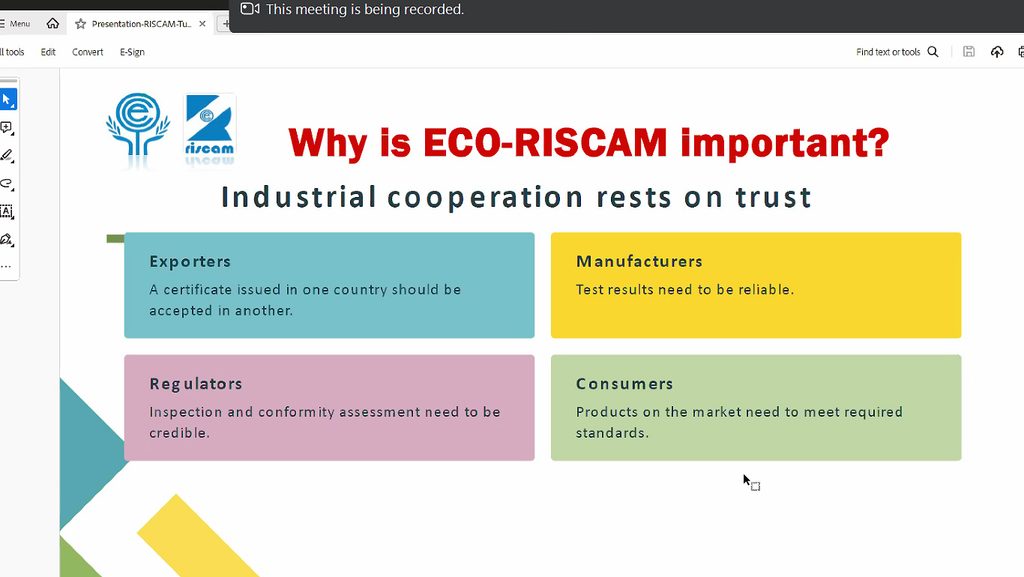
Subsequently, Ms. Lia Zeiaei, Focal Point of the ECO-RISCAM Central Secretariat, presented an overview of the Institute’s activities, achievements and planned initiatives. Technical presentations delivered by TÜRKAK representatives, Mr. Fatih Halis Eroğuz and Mr. Yusuf Eren Akın, addressed the technical and international dimensions of accreditation, TÜRKAK’s roles and responsibilities, and its bilateral and international cooperation activities.
The workshop concluded with an interactive question-and-answer session, providing participants with an opportunity to exchange national experiences, discuss common challenges and explore opportunities for further regional cooperation in accreditation. It marked another practical step towards strengthening regional cooperation in quality infrastructure and advancing the operationalization of ECO-RISCAM.